

There's no single universal rule for how often to take orthodontic progress photos, but published guidance offers useful checkpoints, although timing should reflect each patient's treatment. A systematic review of orthodontic record-keeping studies found that corrective treatment is typically documented with photos at the start of treatment, around the one-year mark, when treatment finishes, and again two years after completion, while interceptive treatment for younger patients follows a slightly different timeline built around six-month and one-year checkpoints. A nationwide survey of orthodontic practices in Spain also confirmed that digital clinical photography has become the standard for diagnosis, treatment planning, and ongoing progress tracking, not an optional extra.
Why a Consistent Photo Schedule Matters
Clinical photography has been part of orthodontic practice since Edward Angle first incorporated it into diagnosis more than a century ago, and it remains one of the few records, alongside radiographs and digital scans, that lets a practice compare a patient's mouth across the entire arc of treatment. A 2025 nationwide survey published in the Journal of Clinical Medicine found that digital photography is now considered the gold standard for this kind of documentation, used for diagnosis, treatment planning, progress tracking, and medico-legal purposes all at once.
A photo taken at the wrong moment, or not taken at all, leaves a gap in that record. Without a consistent schedule, practices risk missing the exact point where a treatment plan needs adjusting, since changes that are obvious when compared photo-to-photo can be easy to miss day-to-day in the chair.
What a Complete Progress-Photo Set Usually Includes
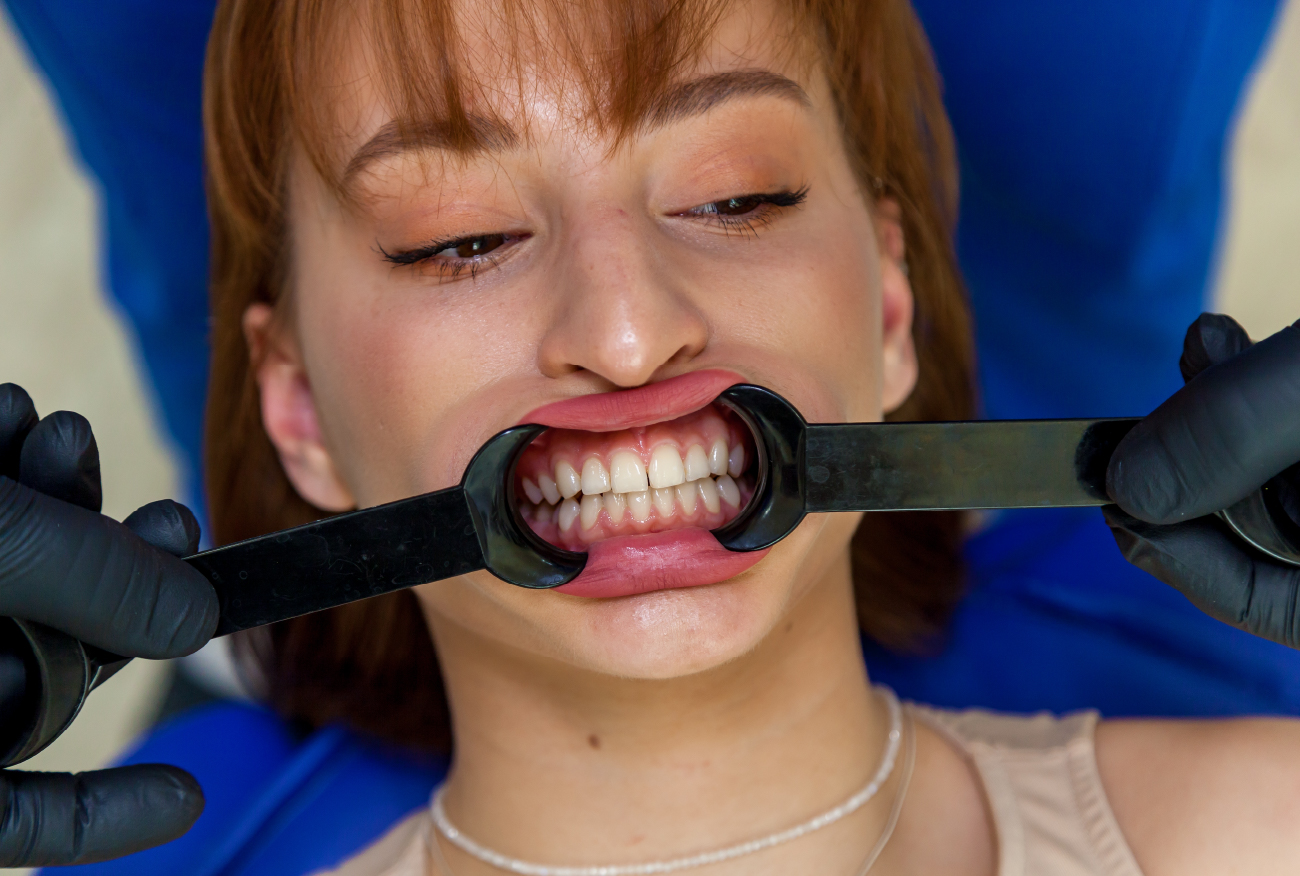
A checkpoint isn't just one photo. Clinical photography guidance from the British Orthodontic Society describes a standard set that typically includes a frontal smiling view, a frontal relaxed view, profile views from both sides, and intraoral shots capturing the bite itself, since no single angle fully captures how a treatment is progressing.
Keeping the same angles, lighting, and framing at every checkpoint is what actually makes the comparison useful later. A pre-treatment photo taken from one angle and a one-year photo taken from another makes it far harder to judge real progress, even if both photos are technically on file.
This is also where a lot of practices lose consistency without realizing it. A different team member taking the photo, a different room with different lighting, or a quick shot taken on a personal phone during a busy afternoon can all introduce enough variation that a side-by-side comparison becomes unreliable, even though every individual photo looks perfectly fine on its own.
What the Research Recommends, Stage by Stage
| Treatment Type | Recommended Photo Checkpoints |
|---|---|
| Interceptive (typically younger patients) | Pre-treatment, 6 months in, 1 year in, at appliance removal, and 2 years post-treatment |
| Corrective (typically full orthodontic treatment) | Pre-treatment, 1 year in, at treatment completion, and 2 years post-treatment |
This consensus comes from a systematic review of the available literature on orthodontic record-keeping, which found that despite real variation between studies, most agreed on checkpoints clustering around these intervals. The two-year post-treatment photo is worth calling out specifically, since it's often skipped in practice even though it's one useful way to assess whether results have held.
Consent Is Part of the Schedule, Not an Afterthought
A photo schedule is only as reliable as the consent behind it. Most practices build a clinical photography consent form into new-patient paperwork once, at intake, rather than re-asking at every checkpoint. Consent requirements can vary by jurisdiction and intended use; practices should document permission appropriately and obtain separate authorization when needed.
Building that consent step into the very first visit means it never becomes a reason to skip or delay a later checkpoint photo.
A thorough consent form should cover more than just permission to photograph. Worth spelling out explicitly: how the images will be stored, who within the practice can access them, whether they'll ever be used for purposes beyond the patient's own chart, such as training or marketing, and how long they'll be retained. Patients are generally far more comfortable with routine clinical photography once they understand exactly where those images live and who can see them.
Digital photography has become the gold standard, providing cost-effective and high-quality documentation for diagnosis, treatment planning, progress tracking, and medico-legal purposes.
Making the Schedule Stick in a Busy Practice
Knowing the ideal checkpoints is one thing; actually hitting them for every patient, every time, is where most practices fall short. The most common failure point isn't forgetting that progress photos matter, it's losing track of which patient is due for which checkpoint photo on a given day, especially across a full schedule of patients in different treatment stages.
Equipment and software choices add another layer of inconsistency. The same nationwide survey found that orthodontists most commonly edit and crop their clinical photos in general-purpose tools like Windows Photos or macOS Photos, rather than dedicated clinical photography software, which makes it easy for images to end up scattered across whichever device happened to be on hand that day, instead of attached to the patient's actual record.
This is the exact problem OrthoPhoto is designed to address: a simple way to capture, organize, and retrieve orthodontic progress photos by patient, so the schedule above becomes something your practice actually follows instead of just something it intends to.
Keep Every Checkpoint on Track
If keeping a consistent photo schedule across your patient list feels harder than it should, see how OrthoPhoto's features are designed around exactly this problem, or reach out to our team with questions about fitting it into your practice's workflow.
Sources
Clinical Photography in Orthodontic Practice: Insights from a Nationwide Survey in Spain — Journal of Clinical Medicine (NCBI)
Systematic Review: Quantity and Frequency of Radiographs, Photographs, and Study Models for Orthodontic Follow-Up — Revista Nacional de Odontología
Clinical Photography in an Orthodontic Practice — Orthodontic Update, British Orthodontic Society Archive
