

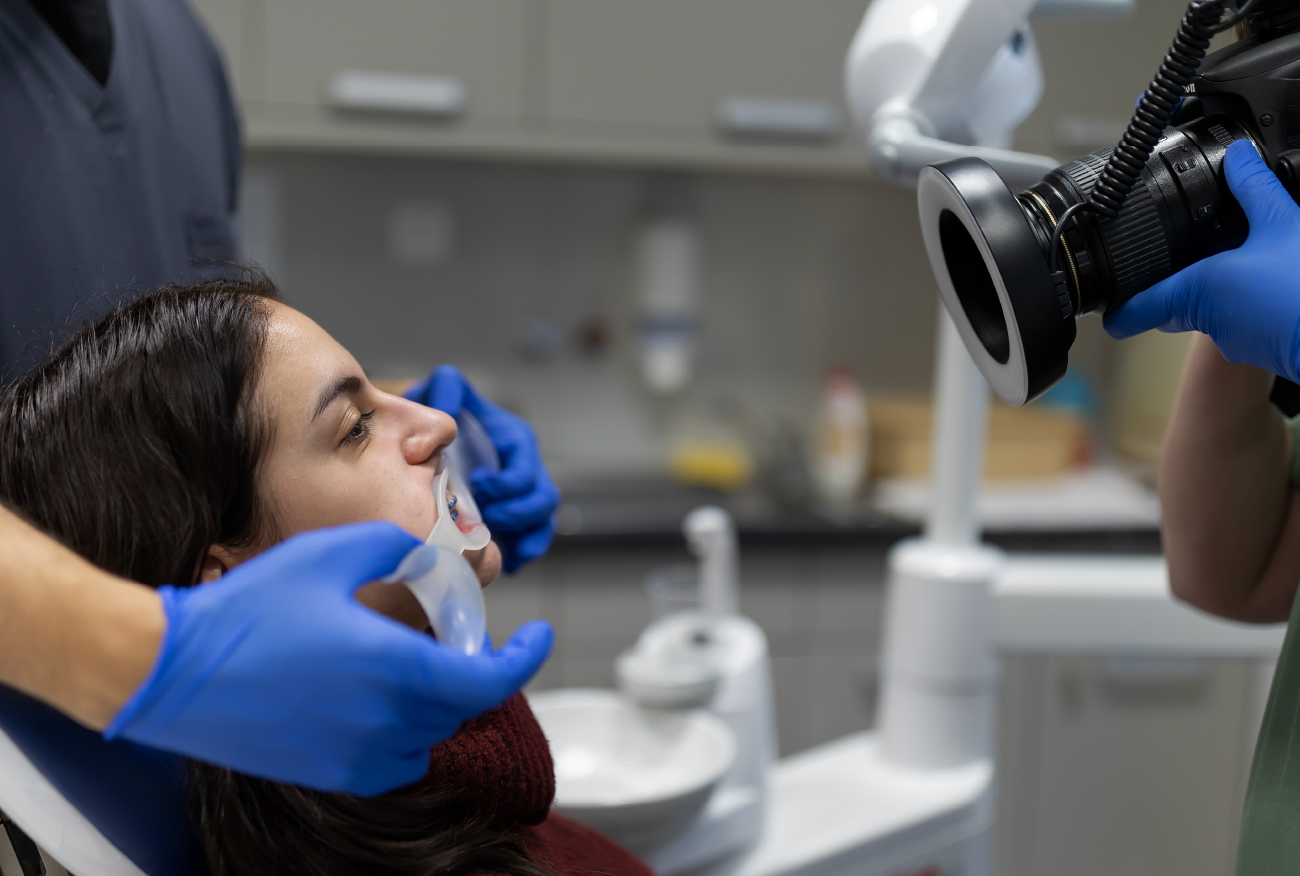
Dental and orthodontic records are routinely described by defense attorneys as an important tool for defending a malpractice claim, and clinical photo documentation is one of the few record types that can show, rather than just describe, what a patient's case looked like at a given point in time. Professional liability insurers consistently flag inadequate documentation as a common risk factor in malpractice disputes, not because the treatment itself was wrong, but because the record couldn't prove it.
Your Record Is Your Strongest Defense
According to a defense attorney writing specifically about dental malpractice cases, accurate and complete records prepared at the time of treatment are the most objective and reliable way of establishing what actually happened during care, and the quality of that record is frequently the deciding factor in whether a claim can be defended at all.
Photo documentation adds something a written chart note can't: a visual record that can be associated with a documented capture date a judge, jury, or insurance reviewer can look at directly, rather than relying solely on a provider's written description of what they observed.
Photos Make the Standard-of-Care Argument Visual
Legal analysis of dental malpractice risk consistently comes back to one core question: did the treatment match the standard of care a reasonably prudent practitioner would have provided? A practitioner who can demonstrate that each clinical decision was consistent with that standard is in a far stronger position to defend against a claim, and a consistent photo record is one of the clearest ways to make that case without relying purely on memory or a provider's own written account.
A single photo rarely wins a case on its own. A complete, consistently timed set, showing the same angles at the same checkpoints across the full course of treatment, does far more work, because it lets a reviewer see the clinical reasoning behind a decision rather than just reading a claim about it after the fact.
Where Documentation Most Often Falls Short
| Common Gap | Why It Hurts a Defense |
|---|---|
| Missing or inconsistent informed consent documentation | One of the most frequently cited issues in malpractice claims reviewed by professional liability companies |
| Records not created at the time of treatment | Backfilled or reconstructed records are far easier to challenge as unreliable |
| No photo record of the original clinical presentation | Leaves no way to show what the patient's case genuinely looked like before treatment began |
| Inconsistent findings documentation across visits | Makes it harder to demonstrate a consistent standard of care over the full course of treatment |
A continuing-education program built specifically around this issue found that documentation problems directly increase both the frequency and financial severity of dental malpractice claims, underscoring that this isn't a minor administrative detail; it's a measurable driver of claim outcomes.
Consent and Retention Are Part of the Documentation, Not Separate From It
A photo is more useful as part of a complete record when the patient photo consent form behind it is on file and properly executed. The American Dental Association's own guidance on dental records lists inadequate documentation of the informed consent process as one of the most frequent issues liability companies report seeing in claims.
Retention matters just as much. The defense attorney behind that perspective practices in New York, where state rules set a six-year minimum, but Texas sets its own periods. Under Texas State Board of Dental Examiners Rule 108.8 (22 TAC §108.8), dental records must be kept for at least five years from the last date of treatment, and for patients last treated before age 18, until the patient turns 21 or five years after the last treatment, whichever is longer. Records tied to providing an orthodontic device carry a longer minimum: seven years, or until a minor patient turns 21 if that is longer, under a 2026 amendment implementing House Bill 4070. These are minimums, and other laws, payer contracts, or a pending dispute can require keeping records longer, so confirm your practice's schedule with the board or your own counsel. Either way, photo documentation needs a storage system built to last, not a folder of images scattered across staff phones and old computers.
A practical test is worth applying to any practice's current system: if a patient from three years ago filed a complaint tomorrow, could every checkpoint photo for that case be located, confirmed as belonging to the right patient, and shown to have been taken on the dates the chart claims? If the honest answer involves searching through old phones, personal cloud accounts, or a former staff member's laptop, that's a real exposure worth closing before it's ever tested.
Accurate and complete records, prepared at the time of the treatment, are the most objective and reliable way of establishing what happened at the time.
What This Means for a Houston Practice's Day-to-Day Workflow
None of this requires a practice to overhaul how it treats patients. It requires a reliable, repeatable way to capture a photo, attach it to the right patient record, and keep it retrievable years later if a question ever comes up, exactly the gap OrthoPhoto is built to close for busy dental and orthodontic practices.
The practices best protected against a documentation-driven claim tend to share one habit in common: they treat photo capture as a required step in the visit itself, not an optional add-on left to whoever remembers. That shift, more than any single tool, is what turns clinical photo documentation from a nice-to-have into the legal asset it's capable of being.
Never altering a record after the fact matters just as much as creating it correctly the first time. Professional guidance on this point is blunt: practitioners should never alter a record when facing a malpractice claim, board inquiry, or patient complaint, since any sign of after-the-fact editing can undermine the credibility of the entire record, photos included. A system that timestamps images automatically, rather than relying on files that can be renamed or replaced, can reduce some documentation risks.
For a solo practice or a small group, building this into daily habits usually matters more than any single piece of software. The goal is simple: every patient, every checkpoint, captured and filed the same way, every time, so the record speaks for itself if it's ever needed.
Build a Documentation Habit That Holds Up
See how OrthoPhoto keeps progress photos organized by patient from the first visit on, or contact our team with questions about fitting it into your practice's existing records workflow.
Sources
The Scope: Dental Records and Liability Protection — A Defense Attorney's Perspective, MLMIC
Writing in the Dental Record — American Dental Association
Risk Focus: Documentation in Dentistry — MedPro Group
Dental Risk Management: Legal Standards Every Dentist Must Master
Adopted Rules, 22 TAC §108.8 Records of the Dentist (effective May 28, 2026) — Texas Register
